The Groundwork of The Future: Improvements in Foundation Technology
In an era where architectural ambitions attain new heights and constructions expand across strenuous terrains, the significance of piling foundations has never been more crucial. Those crucial elements serve as the backbone of many large structures, ensuring security and safety even in the most demanding conditions. As we delve into the advancements in piling technology, it's essential to grasp what piling foundations are and why they are a key component of modern construction practices.
For those new to the field, a beginner's guide to piling foundations reveals a world of intricate engineering designed to confront the complexities of soil behavior and load distribution. From understanding how these foundations work to exploring various types, this article aims to provide thoroughly detailed insights into why piling foundations are elegantly suited for both typical and remarkable construction projects. Whether you're considering building a skyscraper or a simple home, knowing the basics of piling foundations can make all the difference in attaining a safe and durable structure.
Comprehending Pile Foundations
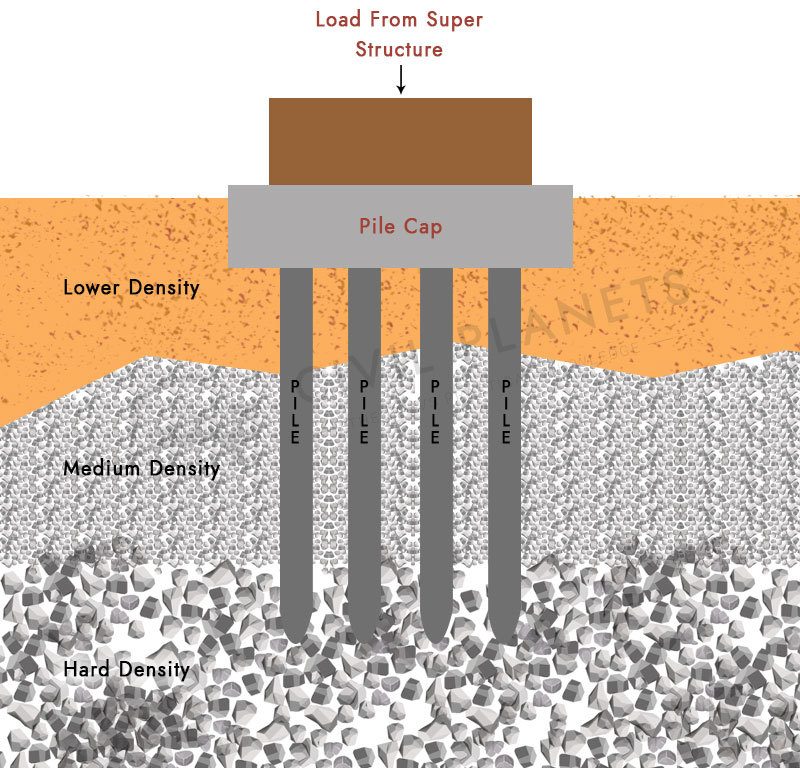
Pile foundations are an essential aspect in modern construction, providing robust support for various structures, notably in challenging soil conditions. These foundations consist of extensive, slender columns made from materials such as concrete, metal, or lumber, hammered or bored deep into the ground to reach stable soil or bedrock. The primary function of pile is to move the load of a structure through soft soil layers, preventing concerns such as settlement or tilting.
The value of piling foundations cannot be overstated. They are essential for projects where traditional shallow foundations are insufficient, particularly in locations with unfavorable soil quality, high water tables, or near bodies of water. Utilizing pile foundations allows for the construction of bigger and more substantial structures, such as skyscrapers, bridges, and piers, while ensuring stability and protection. Engineers analyze site conditions to determine the appropriate kind and depth of piles required for a specific project.
Comprehending how piling foundations work involves recognizing their load-bearing capacity and the multiple methods of installation. Driven piles, for case, are driven into the ground, while bored piles are excavated and filled with mortar. Each method offers specific advantages and considerations based on the building requirements. By understanding the mechanics of piled foundations, builders can make educated decisions that enhance the sturdiness and performance of their structures.
Categories and Uses of Pile Foundations
Piling foundations can be broadly categorized into various types, which are each designed to meet specific soil conditions and project requirements. The most common types include driven pile foundations, which are prefabricated and driven into the ground; bored piles, which are created by drilling into the soil and filling the void with concrete; and screw piles, that are twisted into the ground to provide anchorage. Each type has its own unique advantages, rendering them suitable for various applications in construction, including homes, business facilities, and bridges.
The application of piling is crucial in areas with weak soil where traditional shallow foundations would fail to provide adequate support. This includes coastal regions, flood-prone areas, and locations with high water tables. Pile foundations is essential for supporting large and heavy structures such as skyscrapers, where deep foundations are necessary to penetrate stable soil layers. In these contexts, the piles transfer the load of the building to deeper, more stable ground, thus enhancing structural integrity and preventing settlement.
In addition to these practical uses, advancements in pile foundation technology have led to innovations that improve installation efficiency and environmental sustainability. Miniature piles and micro piles are increasingly used for projects with limited access or where minimal disturbance to the surrounding environment is required. These compact piles can handle significant loads while minimizing the footprint of construction activities. As construction practices continue to progress, the adaptability and performance of piling foundations remain crucial in ensuring the durability and stability of structures across diverse landscapes. spintax ### Challenges and Innovations in Piling Technology
Recent advancements in piling technology have introduced new techniques and materials that improve the efficiency and effectiveness of foundation construction. New methods, such as the use of advanced composite substances for pile construction, have emerged, offering greater durability and reduced weight compared to standard materials. Additionally, automated systems in pile driving and monitoring processes has made it possible to achieve higher precision and reliability in installation, ultimately leading to better structural integrity and more durable foundations.
Regardless of these developments, the piling industry faces a variety of challenges that must be addressed to leverage technological advancements. One major challenge is the diversity of soil conditions at construction sites, which can affect the performance of piling systems. Engineers must continuously adjust and improve their methodologies to address these uncertainties, ensuring that the selected piling solution is efficient and effective. Furthermore, regulatory challenges and environmental considerations complicate the implementation of new technologies, requiring engineers to balance innovation with compliance and sustainability.
Looking ahead, the future of piling foundations lies in the ongoing blend of advanced technologies and data analytics into the construction process. Advancements in monitoring systems allow for immediate data collection on pile performance and soil interaction, providing important data for engineers and project managers. As the construction industry integrates sustainable practices, advanced piling technologies will play a key role in addressing the challenges of unstable soil situations and the growing demand for durable infrastructure. https://pilingcontractorsderbyshire.co.uk/ continued research and development of piling technologies will shape the foundations of tomorrow, creating more secure and long-lasting structures for future generations.